Optimizing Internal Event Scheduling
Optimizing event discovery and scheduling flows to foster connection in hybrid environments
Problem
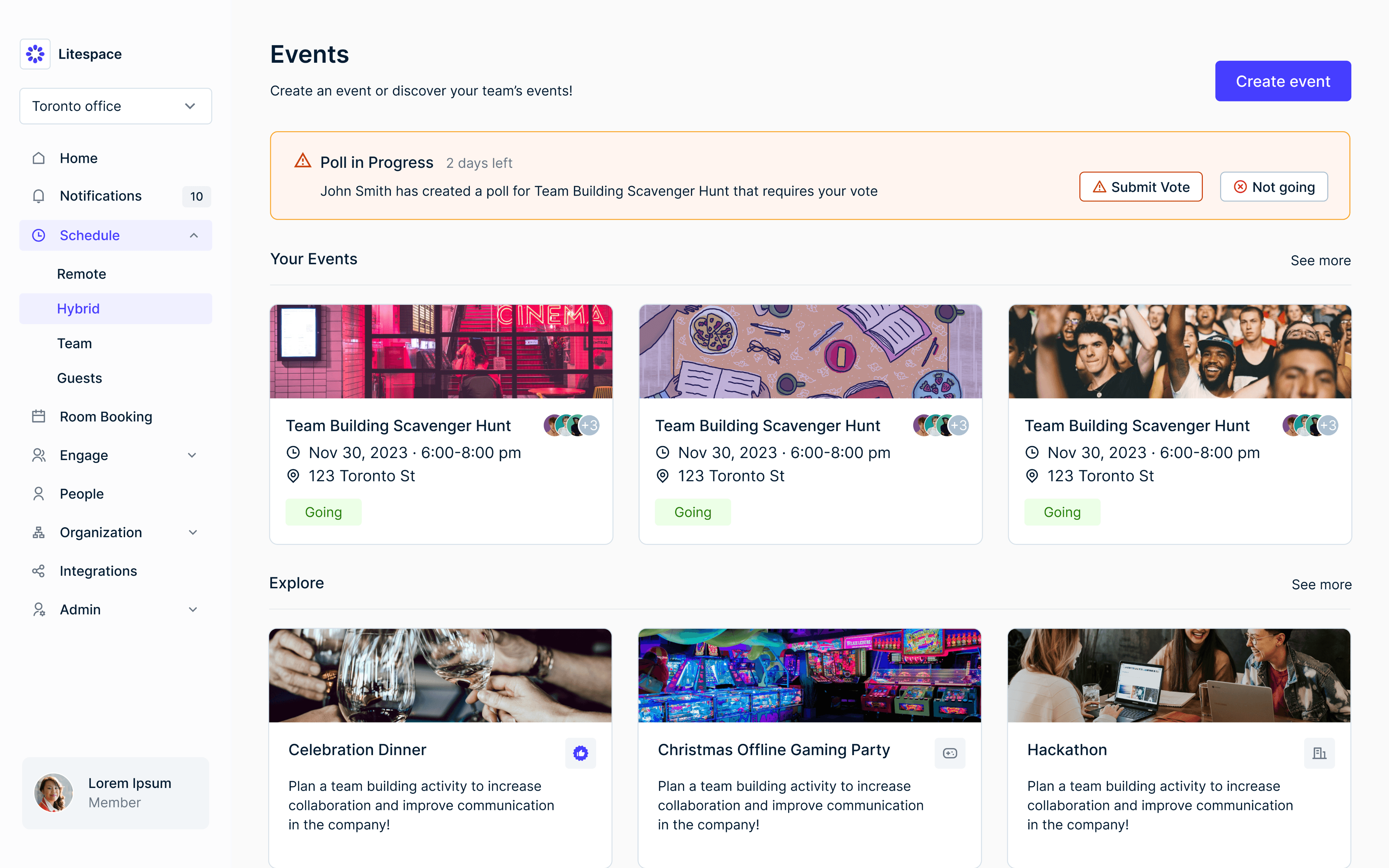
Litespace’s Event Management is a desktop-based platform that enables employees to arrange online and in-person meetups. Following the transition to hybrid work in 2024, our internal tooling encountered a critical bottleneck. With data revealing a 65% drop-off rate at the “Create Event” button. This friction stemmed from a high-effort administrative burden, as organizers have to manually input titles, descriptions, venue sourcing, and checking teammate availabilities. Our clients expressed a desire to lead events but often faced "blank page paralysis," unsure of what to organize, where to host it, or whether their colleagues would actually attend.
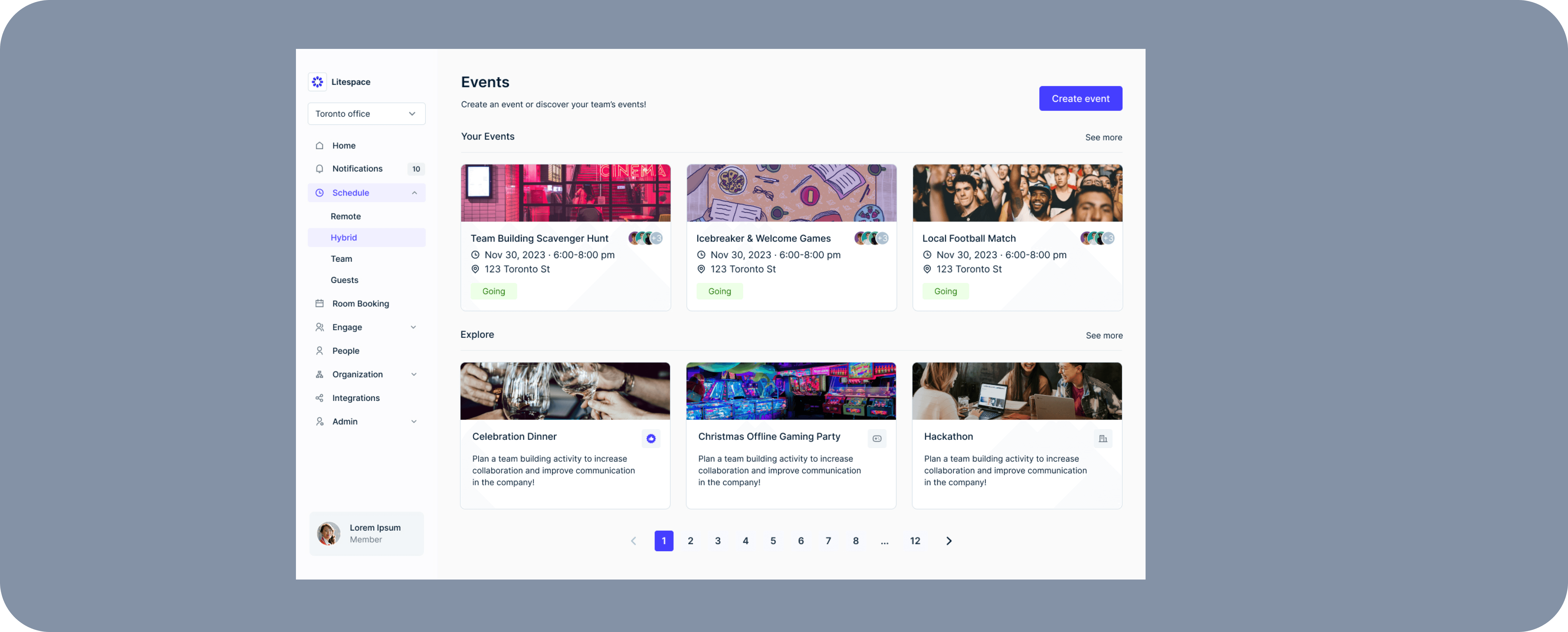
To resolve these pain points, I pivoted the core experience from a manual planning utility to an active discovery engine. Strategic feature upgrades included a curated “Explore Feed” and “One-Click Templates” for activities such as Watch Parties, Online Icebreakers, and Hackathons, which successfully transformed the organizer's role from a “planner” into a “curator”. Central to this transformation was my redesign of the event card, which I treated as a modular information framework.
My Role
Sole Product Designer - Feature Scoping, Research, Prototyping
Team
CTO
Six engineers
Platform
Web app
Timeline
October - December 2024
Outcome
Driving Engagement and Operational Efficiency
🚀 Resulted in a 45% increase in successful event creation.
🚀 A 30% lift in RSVP rates within the first quarter, driven by the "Explore" feed surfacing relevant local activities.
🚀 80% of new event creators utilized a pre-made template for their first event, validating the reduction of "blank page paralysis".
🚀 Reduced the average time to publish an event from 12 minutes to under 2 minutes.
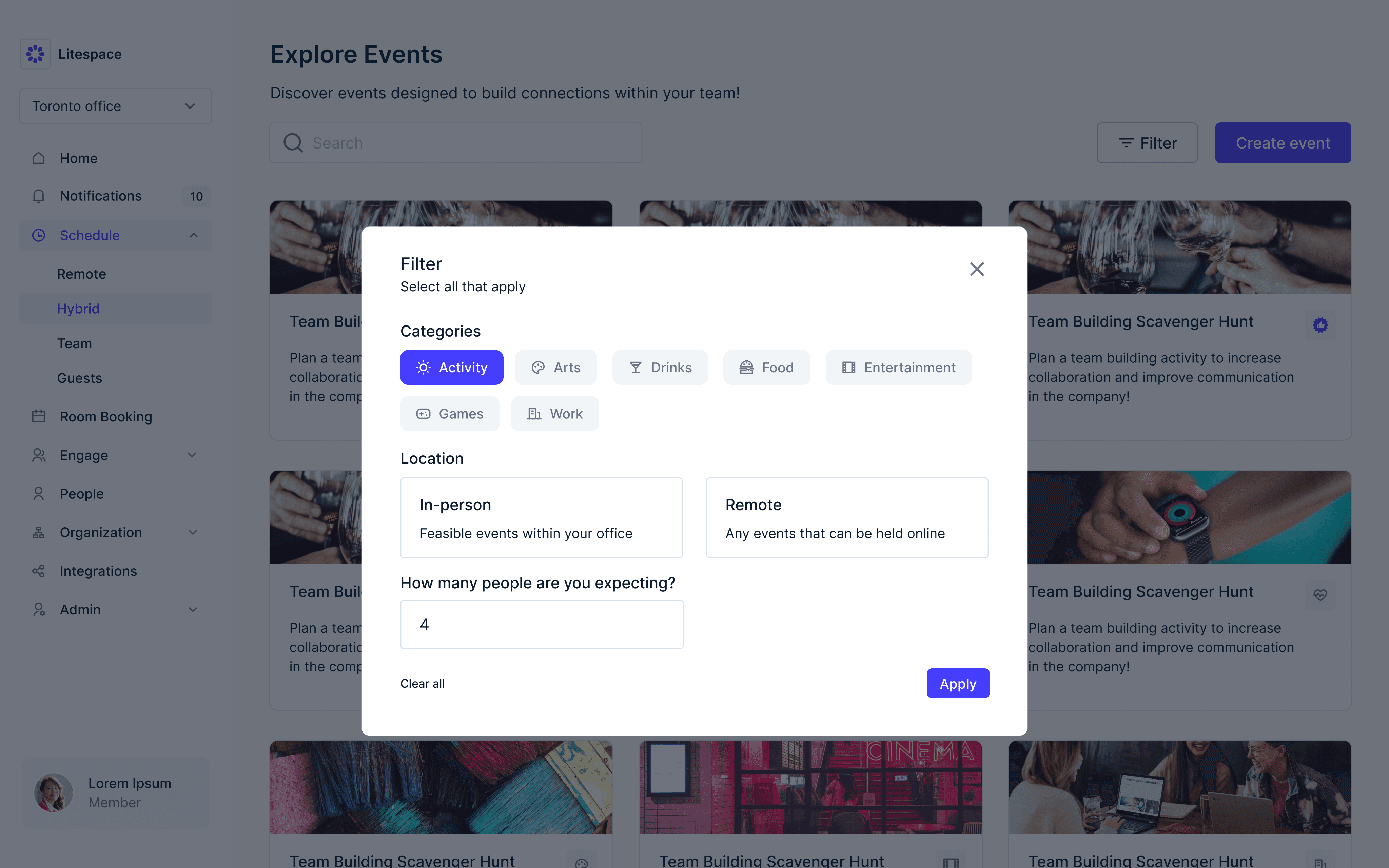
Pillar 1: Filter-Based Discovery
Replaced the empty search bar with a structured discovery layer. Users can filter by category, capacity, and location (In-person vs. Remote) to find immediate inspiration.
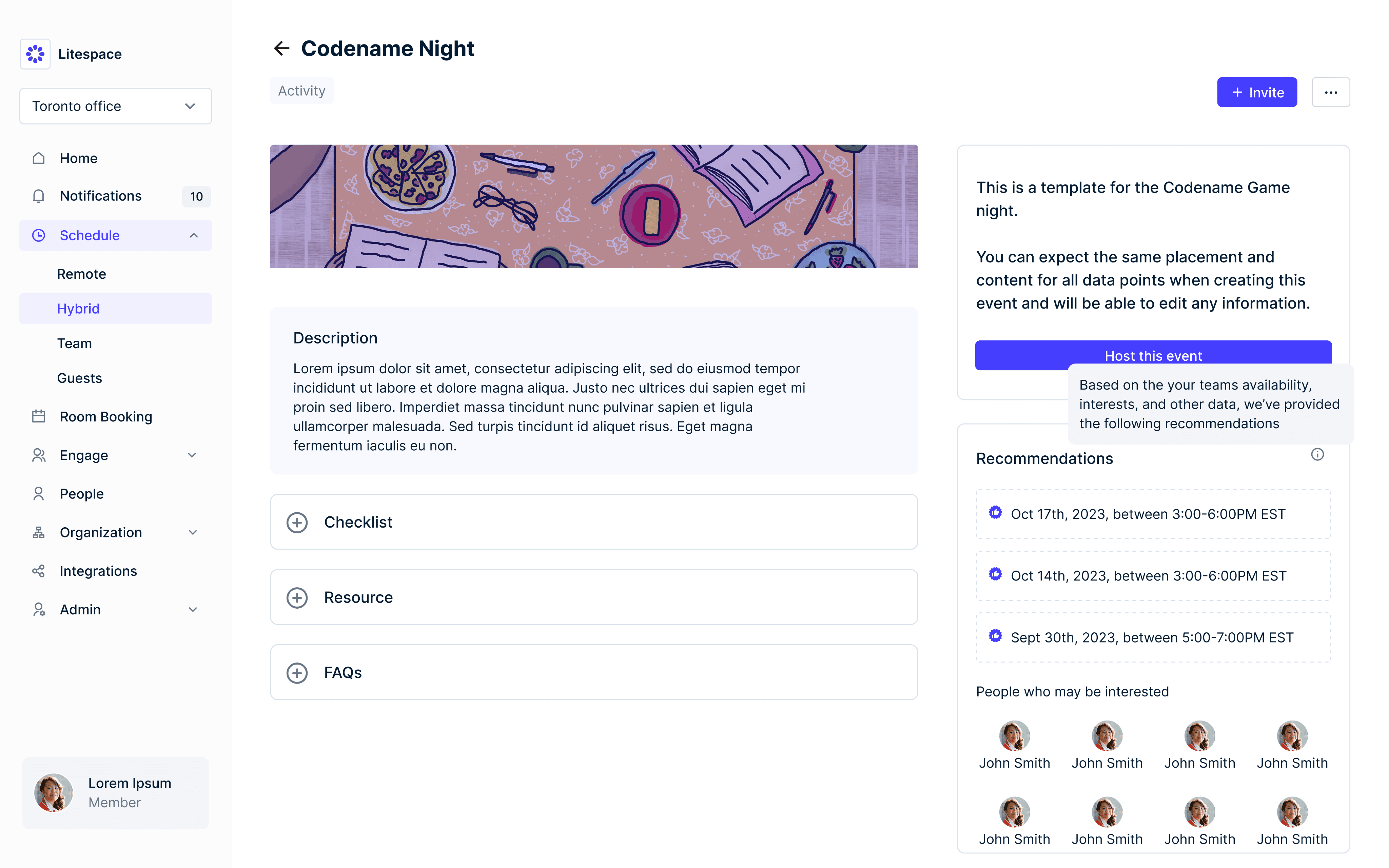
Pillar 2: Scalable Event Templates
Created "Event Recipes" (e.g., Team Lunch, Coffee Chat) that auto-populate descriptions and suggest local venues. This shifted the user’s role from a "planner" to a "curator".
Pillar 3: Polling
Introduced a democratic layer allowing leads to propose template ideas and let the team vote. This removed "attendance anxiety" by validating interest before any logistics were finalized.